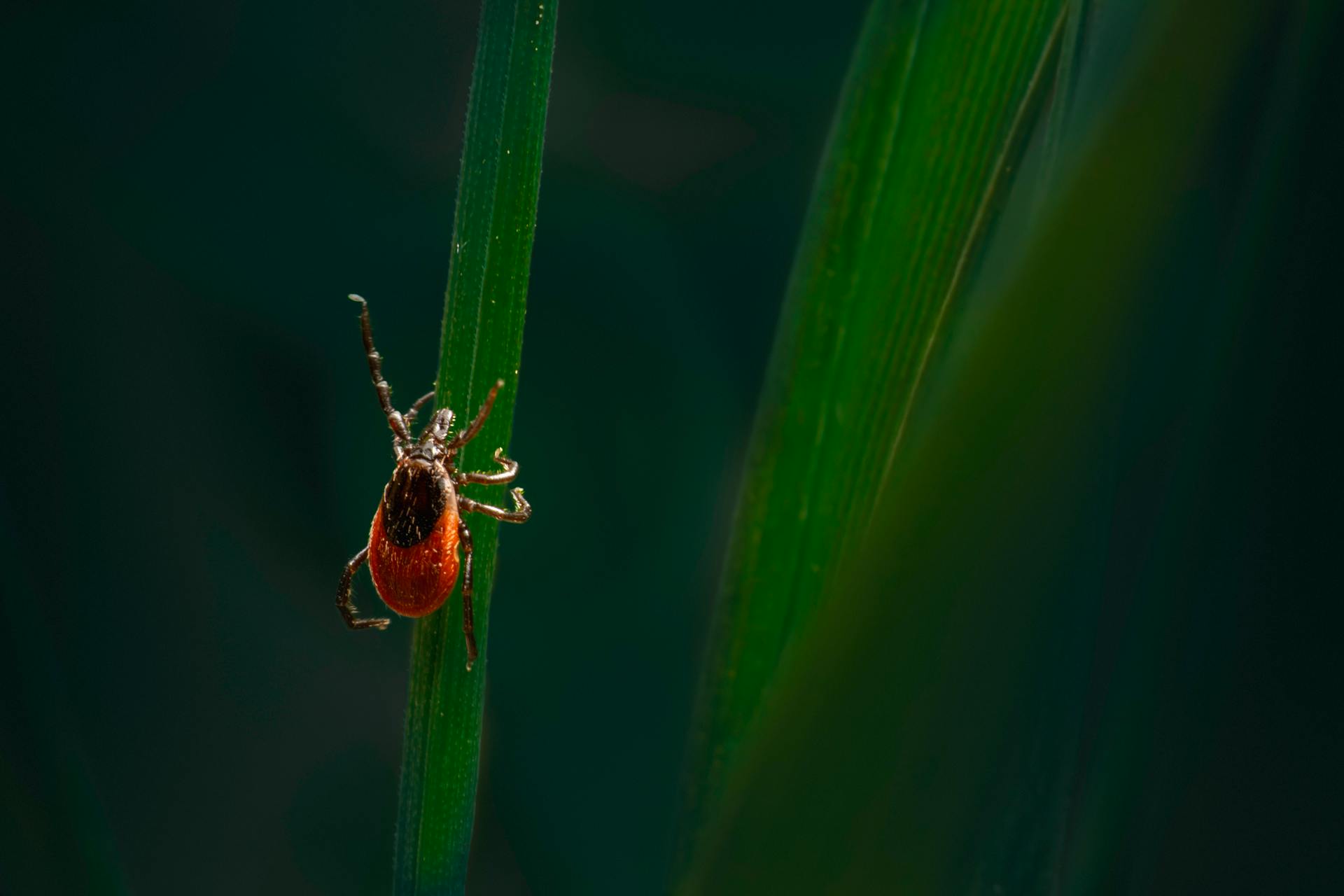
Ticks are a regular feature of the British countryside, particularly for anyone who walks dogs through woodland, heathland, or long grass between March and October. They are small, they attach quietly, and they can carry disease, but they are also easy enough to deal with once you know the routine. The short version: check your dog after every walk in tick season, remove anything you find with a proper tool, and talk to your vet about prevention.
When are ticks active in the UK?
The main tick season in Britain runs from March to October, with the busiest months being April to June. A second smaller rise in activity tends to happen in September. Outside these months, the risk drops significantly, but it does not disappear entirely, particularly in mild winters.
The areas with consistently high tick numbers include the Scottish Highlands, the New Forest in Hampshire, Exmoor and Dartmoor, the Lake District, the Surrey Hills, the South Downs, the Yorkshire Moors, and Thetford Forest in Norfolk. If you walk regularly in any of these areas, it is worth being particularly thorough with post-walk checks.
That said, ticks are found across most of the UK, not only in these hotspots. Any area with deer, sheep, rabbits, or hedgehogs nearby is potential tick territory.
Where do dogs pick up ticks?
Ticks do not jump, fly, or fall from trees. They use a behaviour called questing: they climb vegetation to a height of roughly 10 to 60 centimetres, stretch out their front legs, and wait for a passing host to brush against them. Once a warm body makes contact, they attach and begin feeding.
The highest-risk habitat by some distance is bracken. After bracken, the next highest-risk areas are woodland edges. The transition zone between trees and open ground tends to have more ticks than the woodland interior, followed by long grass, heathland, and moorland.
It is also worth knowing that ticks can turn up in suburban gardens, particularly where hedgehogs pass through. The hedgehog tick is a different species from the sheep tick found on moorland and in woodland, but it can still bite dogs and is worth looking out for closer to home.
How to check your dog for ticks
After any walk in tick season, run your fingers slowly through your dog’s coat from the skin outward. A newly attached tick is tiny, roughly the size of a poppy seed, and feels like a small firm bump. An engorged tick that has been feeding for a day or more is larger and easier to spot. Both need removing.
Where to check, in order of priority:
- Around and inside the ears
- Under the collar and around the neck
- The armpits, where the front legs meet the chest
- Between the toes and under the paw pads
- The groin and inner thighs
- Around the base of the tail and under it
- The eyelids and around the muzzle
Do not skip the ears. They are one of the most commonly missed spots and ticks find them very attractive. Biscuit once came back from a New Forest walk with three, all in or around his ears, invisible until I checked carefully.
How to remove a tick correctly
The right tool for this is a tick removal hook: a small device designed to slide under the tick and lift it free without squeezing the body. They cost around five to eight pounds and are available at most pet shops, vets, and online. Keep one in your walking kit and it becomes second nature.
To remove a tick with a hook tool:
- Part the fur so you can see the tick clearly and reach the skin.
- Slide the notch of the hook under the tick at skin level, keeping it as flat against the skin as possible.
- Rotate the tool gently. Two or three turns is usually enough. The tick releases on its own.
- Check the bite site to confirm the whole tick has come away.
- Drop the tick into a sealed bag or container and dispose of it.
- Clean the bite area with an antiseptic wipe and wash your hands.
What not to do is just as important. Do not squeeze the tick’s body at any point: this can push its stomach contents back into the bite. Do not try to burn it off, apply Vaseline or petroleum jelly, or dab it with nail varnish or alcohol while it is still attached. All of these methods are ineffective and can make the situation worse.
What diseases can ticks carry?
The most well-known tick-borne disease in the UK is Lyme disease, which is caused by bacteria carried by the common sheep tick. Most tick bites do not result in Lyme disease, but there is no safe window: risk increases significantly the longer the tick feeds, so remove any tick as soon as you find it. In dogs, Lyme disease can cause joint swelling and lameness, lethargy, and loss of appetite. It is treatable with antibiotics and responds well when caught early.
There is also a condition called babesiosis: a blood infection caused by a microscopic parasite, carried by a different tick species called the ornate dog tick. In the UK this has been identified mainly around Harlow in Essex and parts of the surrounding area. It is uncommon and currently geographically limited, but worth knowing about if you walk in that part of the country. Signs include lethargy, pale or yellowed gums, and weakness. It requires prompt veterinary treatment.
The most practical thing to take from any of this is that early removal is your best protection. A tick found and removed on the same day it attached carries a much lower disease risk than one that has been feeding for two days unnoticed.
How to protect your dog from ticks
Several types of preventative treatment are available: spot-on treatments applied to the skin, chewable tablets, and long-acting collars. Some last a month, others several months. They vary in what they do: some kill ticks after attachment, others work to repel them. Your vet is the right person to advise on what suits your dog, based on where you walk, how often, and your dog’s size and health.
If you walk regularly in a high-risk area, it is also worth asking your vet about the Lyme disease vaccination for dogs. It is not a routine vaccine but it is available, and for dogs with regular high-exposure walks it is a reasonable conversation to have. Sniffout flags tick risk on individual walk pages for woodland and heathland routes between March and October, so you can see at a glance whether a walk falls into higher-risk territory.
When to call the vet
Most tick encounters are uneventful. Call your vet if any of the following apply:
- You could not remove the tick cleanly and suspect part of it remains under the skin
- The bite site looks infected, swollen, or is not healing
- A circular or ring-shaped rash appears around the bite area. If you spot one on yourself after a walk, that is worth acting on
- Your dog becomes lethargic, loses interest in food, or develops swollen joints in the weeks following a tick bite
- You walk regularly around Harlow or Essex and your dog seems unwell after a tick bite. Mention this specific detail to your vet
Early treatment makes a significant difference in all of these scenarios. It is always better to call and ask than to wait.
A final word
After a good number of years walking public footpaths, the thing I can say most confidently about ticks is that the right routine takes about five minutes and genuinely reduces the risk. Check after every walk during the season, use a proper removal tool when you find one, and have a conversation with your vet about prevention if you have not already. Mango and Biscuit still get a thorough going-over after anything involving bracken or woodland edges. It is just part of coming home.
Frequently asked questions
When is tick season in the UK?
The main tick season runs from March to October, with activity peaking between April and June and a smaller secondary rise in September. Outside these months the risk drops considerably, though it does not disappear entirely in mild winters. If you walk in woodland, heathland, or long grass anywhere in the UK, it is worth checking your dog after every walk from early spring onwards.
How do I remove a tick from my dog?
Use a tick removal hook, not fingers or tweezers. Slide the notch of the hook under the tick at skin level, then rotate gently two or three turns until the tick releases. Do not squeeze the tick’s body at any point, and do not try to burn it off or apply Vaseline or alcohol while it is still attached. Once removed, clean the bite area with an antiseptic wipe and wash your hands.
Can ticks make my dog seriously ill?
Most tick bites do not result in illness. The main tick-borne disease in the UK is Lyme disease, which is treatable with antibiotics when caught early. There is also babesiosis, a more serious blood infection currently limited to parts of Essex and the surrounding area. The practical upshot is the same for both: remove ticks promptly, as the longer a tick feeds the greater the risk of transmission. If your dog develops lameness, lethargy, or swollen joints in the weeks after a tick bite, call your vet.
Where are the highest-risk areas for ticks in the UK?
Ticks are found across most of the UK, but consistently high-risk areas include the Scottish Highlands, the New Forest in Hampshire, Exmoor and Dartmoor, the Lake District, the Surrey Hills, the South Downs, the Yorkshire Moors, and Thetford Forest in Norfolk. Bracken is the highest-risk vegetation type wherever you find it. Any area with deer, sheep, rabbits, or hedgehogs nearby carries some level of tick risk, including suburban gardens.
What tick prevention is available for dogs?
Several options are available: spot-on treatments, chewable tablets, and long-acting collars. Some kill ticks after attachment, others work to repel them. They vary in duration from one month to several months. Your vet is the right person to advise on which suits your dog based on where you walk and how often. If you walk regularly in a high-risk area, it is also worth asking about the Lyme disease vaccination for dogs, which is available in the UK though not part of the routine vaccination schedule.