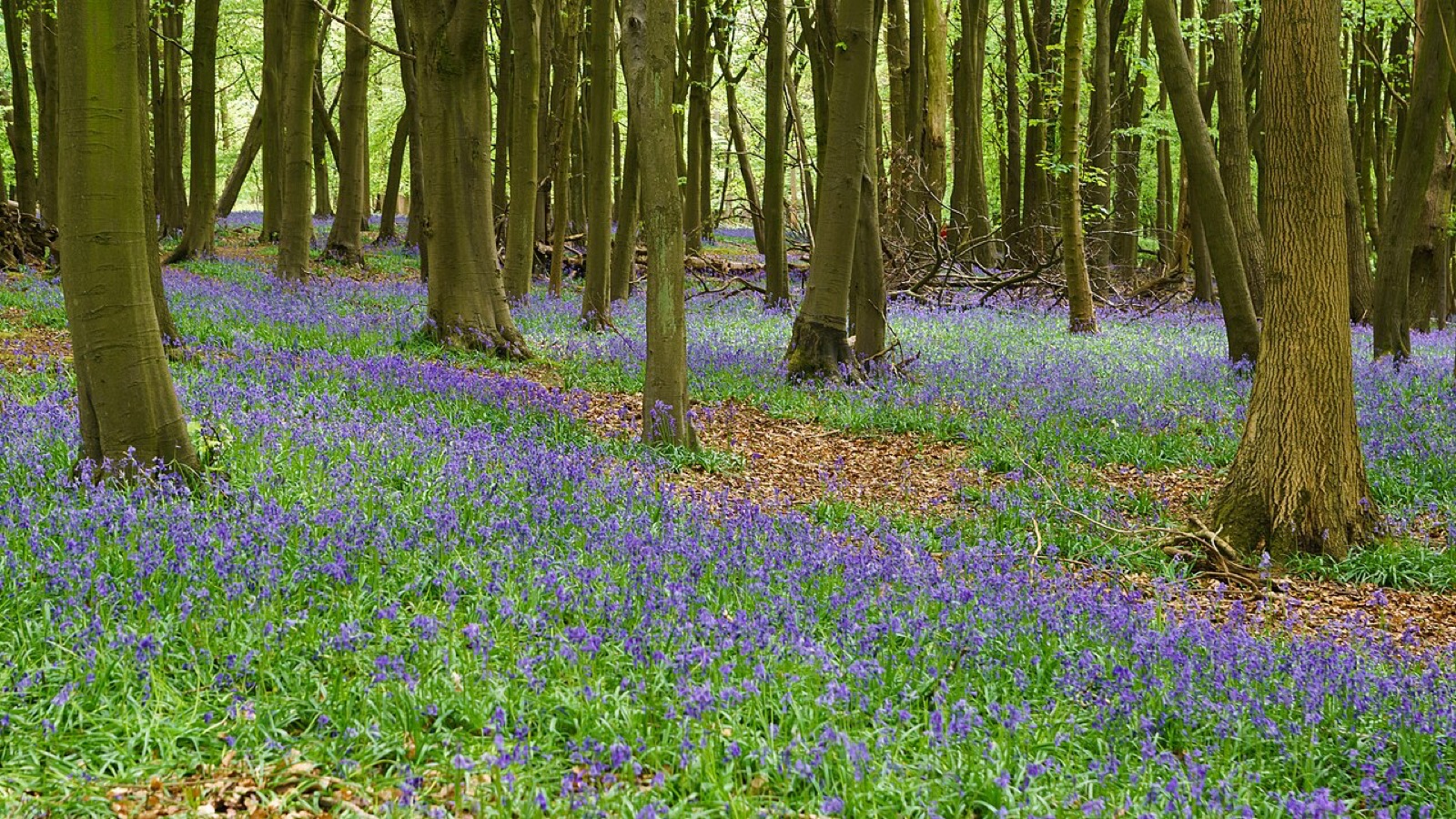
Ashridge Estate Bluebell Walk
Berkhamsted, Hertfordshire
Ashridge Estate’s bluebell display in Dockey Wood runs from mid-April to early May. The window is short and the car park fills fast at peak weekends - a weekday visit is worth the planning.
The walk runs through ancient beech woodland on wide, mostly level paths with gentle gradients. In dry conditions the footing is good. After rain, beech roots on the lower paths can be slippery and the ground holds water longer than you expect.
Your dog can go off lead in the general woodland sections, but must be on a lead in Dockey Wood during bluebell season. All parts of the bluebell plant are toxic to dogs, and fencing marks the visitor routes through the most sensitive areas. If your walk extends toward Ivinghoe Hills, keep your dog on a lead at all times - 300 sheep graze there year-round.
The fallow deer herd has been on the estate since the medieval period. In October the rut brings them through the beech trees in numbers, which is one of the better reasons to come back outside of bluebell season.
The Greyhound Inn in Aldbury, at the foot of the estate, welcomes dogs. The National Trust cafe at the visitor centre has outside seating.
Frequently asked questions
Can my dog be off lead during the bluebell walk?
In general woodland sections, yes - off lead under close control is permitted. However, in Dockey Wood during bluebell season (mid-April to early May), dogs must be on lead to protect the flowers and because all parts of the bluebell plant are toxic to dogs. If your route takes you toward Ivinghoe Hills, dogs must be on lead at all times due to the 300 sheep grazing there.
When is the best time to see the bluebells?
The bluebells at Dockey Wood typically start flowering in mid-April and are at their best in the last week of April and first week of May. The exact timing varies with spring weather. Visit early on a weekday to avoid peak crowds - the car park fills quickly at peak weekends.
Are the fallow deer dangerous to dogs?
Generally the deer will flee from dogs. However, during the fallow rut in October, bucks can become territorial and aggressive. Keep dogs on lead in areas where deer are active during October. Muntjac deer are also present and may trigger a chase response.
What hazards are there for dogs at Ashridge?
Ticks are the main year-round hazard - check dogs thoroughly after every visit. Bluebell toxicity (all parts of the plant) is a specific risk in spring - do not allow dogs to eat the plants. Mud on woodland paths can be significant after rain. The 300 sheep on Ivinghoe Hills require dogs on lead in that section.
Plan this walk with live weather and dog-safe route info