
It is a warm July afternoon and Biscuit has found water. He is in before you have a chance to call him back - chest-deep, lapping at the surface, entirely pleased with himself. Most of the time this is fine. Near a lake with a green tint to the shallows and a faint scum along the edge, it is not.
Blue-green algae is one of the few hazards on a dog walk that can kill an otherwise healthy dog in a matter of hours. It appears in lakes, ponds, rivers, and reservoirs across the UK during warm weather. It is not always obvious from the bank. And dogs that swim in or drink from affected water can become seriously ill very quickly.
What is blue-green algae?
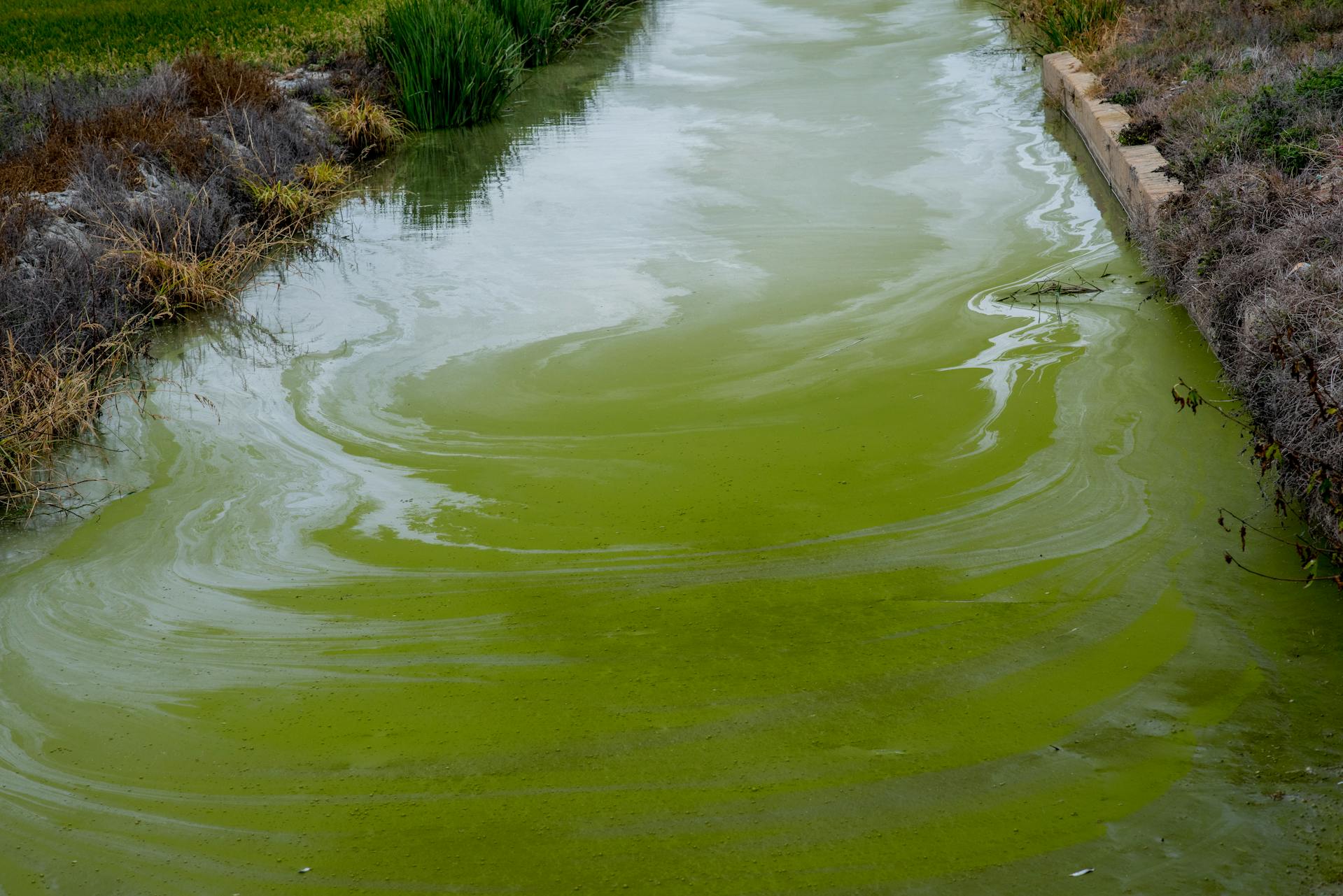
Despite the name, it is not algae. Blue-green algae is caused by cyanobacteria, microscopic bacteria that can form blooms in freshwater when conditions are right. Warm temperatures, still water, and high nutrient levels create the conditions most likely to produce a bloom, which is why the problem is most common from late spring through to early autumn, typically May to September.
A bloom can look like green or blue-green paint on the water surface. It can appear as foam, scum, or floating mats. It can smell unpleasant, though not always. And in some cases the water can look clear and still be affected, which is the part that makes this hazard harder to manage than most.
Where does it occur in the UK?
Blue-green algae affects lakes, reservoirs, ponds, slow-moving rivers, and canals. It is most prevalent in lowland areas with agricultural or urban run-off, though it has been recorded across most regions of England, Scotland, and Wales.
The Environment Agency and UKHSA monitor known water bodies and issue warnings when blooms are confirmed. Warning signs are posted at many affected sites during bloom season. However, signs are not present everywhere. Smaller ponds and private reservoirs are much less likely to be monitored or signed. The absence of a warning sign does not mean the water is safe.
For current warnings, check your local council website and the Environment Agency’s news and alerts page before any summer walk near lakes, reservoirs, or slow-moving water. The Canal and River Trust also issues warnings for canals and inland waterways. Warning signs posted at the water’s edge are the most immediate indicator, but smaller ponds and private water bodies are rarely monitored or signed.
Why is it dangerous for dogs?
Some strains of cyanobacteria produce toxins that affect the liver and nervous system. Dogs are particularly vulnerable because they swim readily, may drink large volumes of water, and will lick contaminated fur afterwards. The toxins can take effect within fifteen to sixty minutes of significant exposure. There is no antidote.
The honest thing to say about the risk level is this: most lakes on most summer days are fine. But blue-green algae poisoning is serious enough, and fast enough, that the habit of checking before a swim near any warm, still water body is worth developing. The cost of checking is low. The cost of not checking, in the cases where it matters, is high.
Signs of blue-green algae poisoning
If [dog name] has been in contact with affected water, signs can appear within fifteen to sixty minutes:
- Vomiting and diarrhoea
- Seizures or muscle twitching
- Weakness or sudden collapse
- Difficulty breathing
- Loss of consciousness
This is a veterinary emergency. Do not wait for symptoms to develop before calling. If you have any reason to suspect blue-green algae exposure, call the vet immediately.
What to do if [dog name] goes in affected water
If you see green scum, foam, or paint-like patches on water and [dog name] has already been in it, act immediately:
- Get [dog name] out of the water.
- Do not let [dog name] lick their fur - rinse them with clean water if you have any with you, or as soon as you reach a tap.
- Call your vet straight away. Tell them specifically that you suspect blue-green algae exposure and describe what the water looked like.
- Do not wait to see whether symptoms develop before calling.
Speed matters here more than with almost any other hazard in this guide series. If your vet is closed, call an emergency vet line.
How to reduce the risk on summer walks
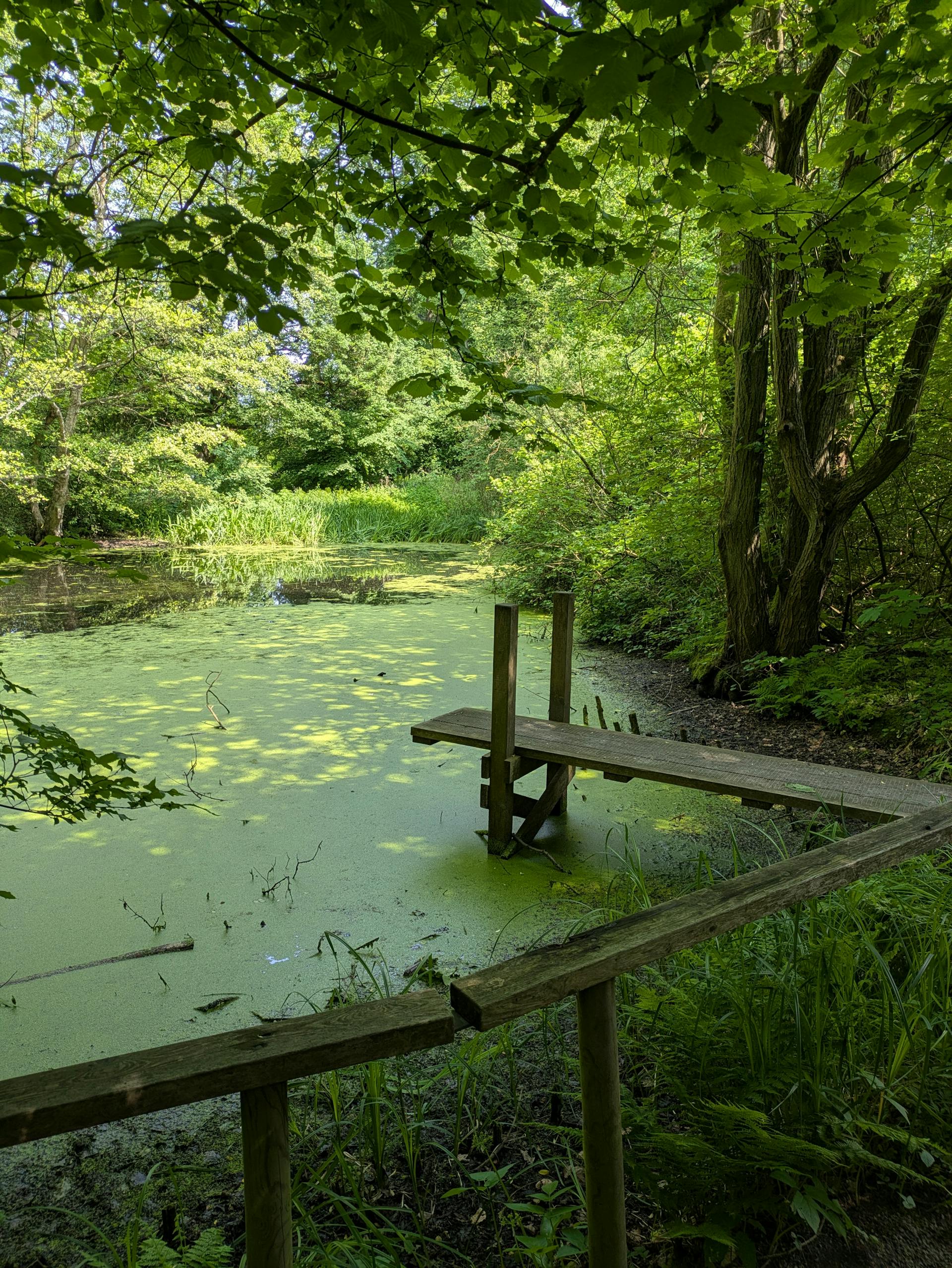
A few habits make a significant difference during the May to September season:
Check local council websites and the Environment Agency news and alerts page before walks near lakes, reservoirs, or slow rivers in warm settled weather. Blooms develop quickly - a water body that was clear last weekend may not be clear today.
If you see green or blue-green discolouration, surface scum, or foam along the water’s edge, keep [dog name] out regardless of whether there is a warning sign. If in doubt, do not let them in.
Be particularly cautious after a run of warm, dry, sunny days. These are the conditions that allow blooms to develop fastest. A lake that looks attractive after a week of July heat is worth treating with more caution than usual.
Rinse [dog name] with clean water after any swim near still or slow freshwater during the peak season, even if the water looked fine.
A practical note
Mango once waded into a reservoir on a Lake District walk that had a small warning sign on a post I walked straight past without registering. She was out quickly and showed no signs, but it is the kind of thing that stays with you as a reminder that signs are not always obvious.
The risk from blue-green algae is real, particularly in warm summers, but it is also avoidable with a straightforward habit: check local water quality warnings before summer walks near lakes and reservoirs, and keep [dog name] back from any water that looks discoloured or has surface foam. That combination, done consistently, removes most of the risk.
If you are planning a walk near water this summer, many Sniffout walks pass lakes, reservoirs, and rivers where blooms have been recorded in previous seasons. Check local council websites and the Environment Agency news and alerts page before heading out during the warmer months.