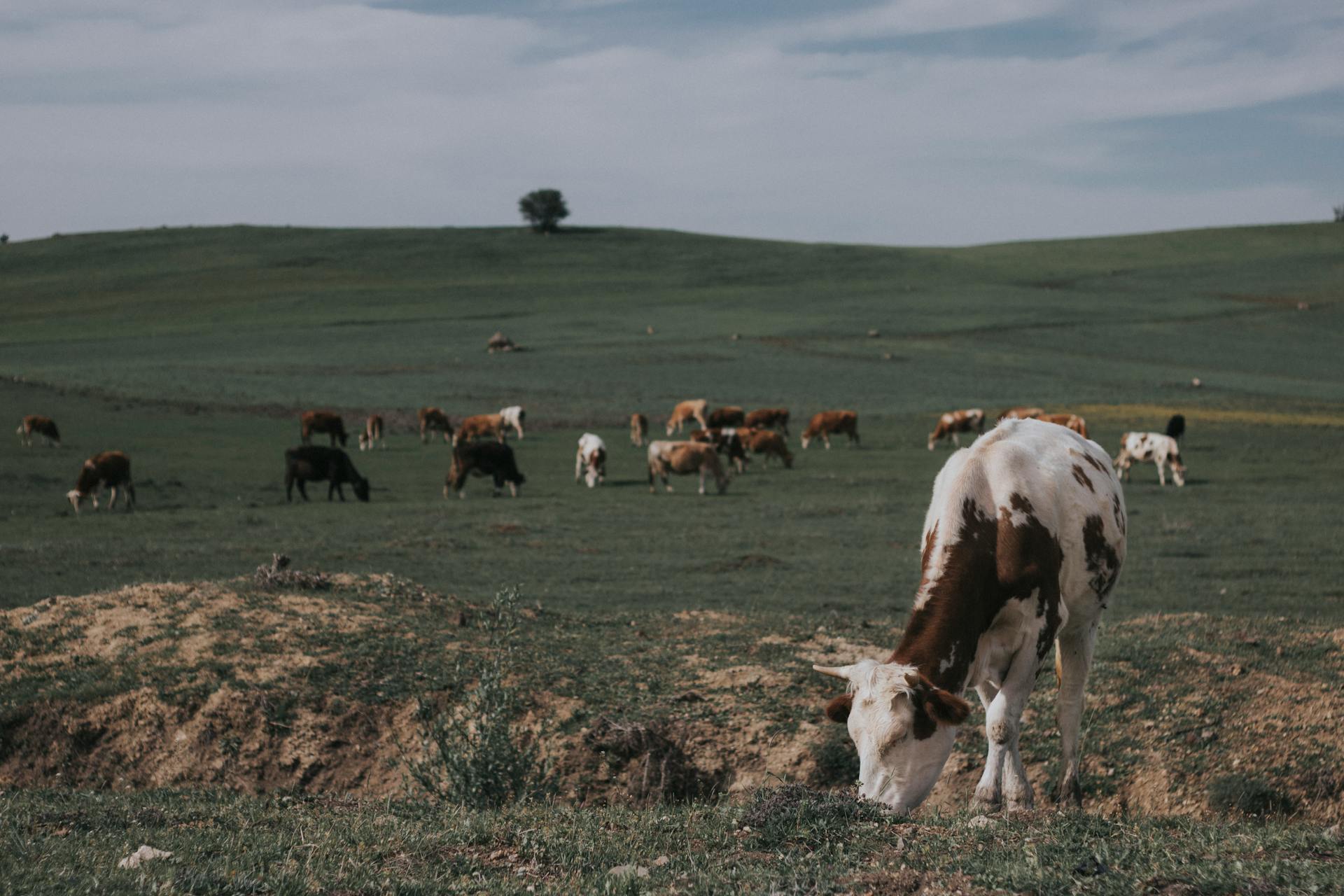
The first time Biscuit came face to face with a field of Belted Galloways in upper Northumberland, neither of us was quite ready for how quickly a herd of cattle can cover ground. We were well past the gate and halfway across before I noticed the calves. By the time the lead was tight in my hand, the nearest cow was already moving.
Nothing happened. We walked to the far hedge steadily, without running, and the herd stopped about twenty metres short. But that encounter taught me something no amount of reading had properly conveyed: the speed at which a curious or protective herd closes distance is surprising if you have not seen it. Understanding why it happens makes everything that follows easier.
Cattle are responsible for more deaths on UK footpaths than any other animal. That is consistent with HSE guidance on cattle safety, and it is a finding frequently cited without the context that makes it useful: most incidents involve dogs. Not because cattle are inherently dangerous to people, but because dogs trigger a specific response in cattle, and that response can escalate quickly in the wrong conditions.
Why cattle react to dogs
Dogs look, smell, and move like predators. That is not a slight on Biscuit and Mango. It is simply how cattle read them. A dog on a lead, moving steadily through a field, registers to the herd as a predator moving through their territory. For most herds in most situations, that produces watchfulness and some movement towards the perceived threat. In a herd with young calves, the protective instinct is considerably stronger.
The important thing to understand is that a dog’s behaviour is largely beside the point. A calm spaniel sitting quietly beside you will produce much the same response as an excited dog pulling at the lead. The trigger is presence and movement, not aggression. This is why the standard advice to keep dogs under control is necessary but not always sufficient on its own.
Legal position on footpaths through cattle fields
Public footpaths cross private land. Farmers have a legal right to graze cattle in fields with footpaths running through them, with some restrictions. The main restriction relates to bulls: dairy breed bulls over ten months old cannot be kept in fields with public footpaths. Beef breed bulls can be, provided they are in the company of cows or heifers. In practice, bull-related incidents are less common than incidents involving cows with calves.
Neither the walker nor the farmer is doing anything wrong by being there. The Countryside Code is clear that the right to use a footpath comes alongside a responsibility to respect the land and the farming that happens on it. The NFU encourages farmers to warn walkers when calves are present, and most do. A notice on a gate is not there to discourage you. It is useful information.
What to do when entering a cattle field
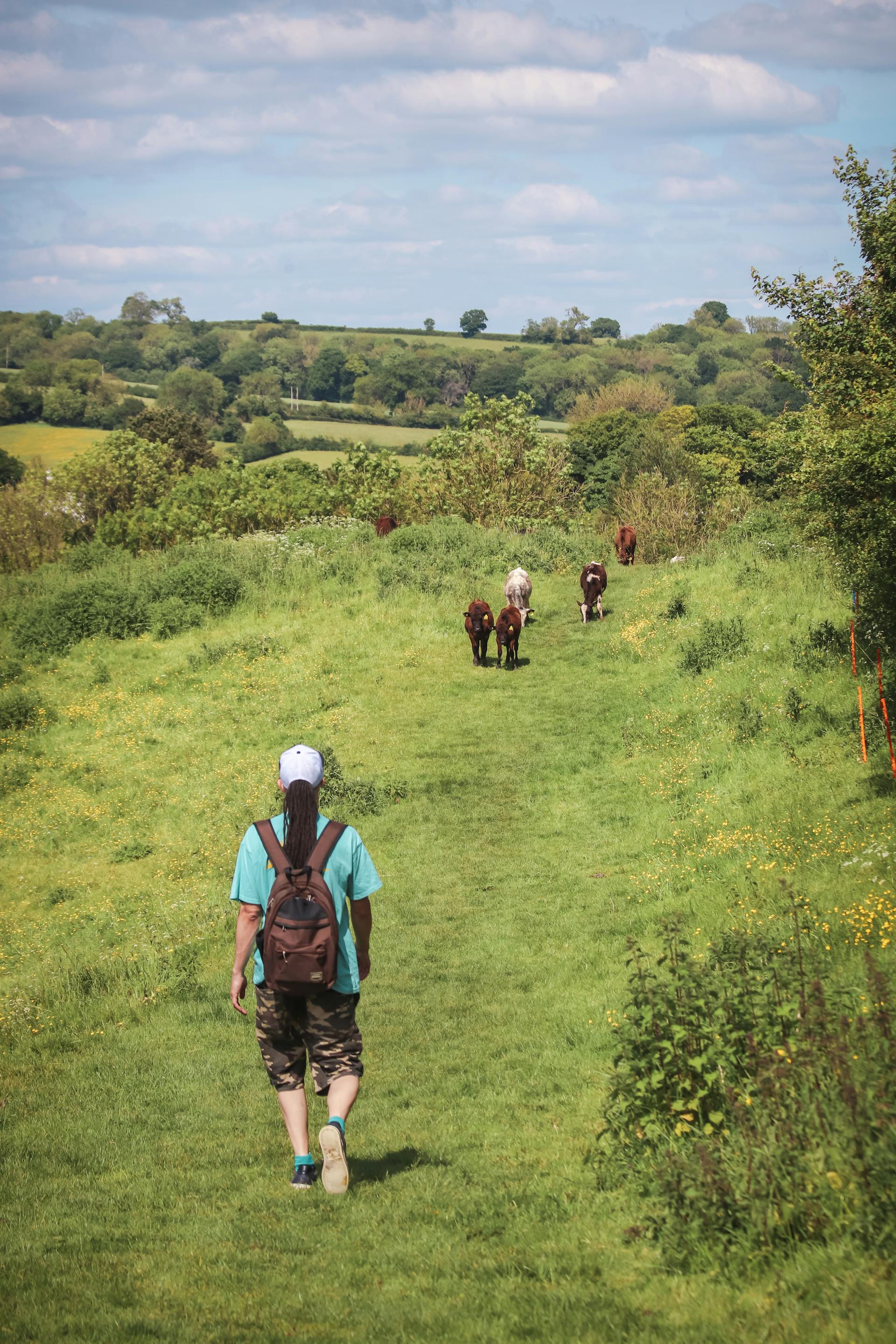
Before you open the gate, stop and look. Where is the herd? Are there calves? Is there a clear route from where you are standing to the far exit? This takes thirty seconds and changes how you walk the field.
If there are calves, assess seriously whether you need to cross at all. In spring and early summer, when calves are young and mothers are most protective, the most effective decision you can make is to take a different route. If the OS map shows an alternative path that avoids the field, this is the time of year to use it.
If you are going through: keep the lead short. A long lead gives a dog more range and makes it look more like a free-running animal to the herd. Walk steadily at a normal pace, as close to the field boundary as the path allows. Keep to the hedge or fence, not through the centre of the field. Give the herd as wide a berth as you can. No sudden movements, no raised voices. If Biscuit starts fixating on the cattle, I move him to heel and keep his attention on me rather than the herd. It helps.
If cattle start to approach
The instinct is to speed up. Resist it. Running triggers the chase response and you will not outpace a moving herd. Walk steadily and directly towards the nearest exit: a gate or stile, not just the hedge. Maintain a normal pace. Keep your eyes on where you are going rather than on the cattle.
If they continue to approach and get very close, and you feel you are in genuine danger: let the lead go.
This is the most important single piece of advice in this article. A dog without a lead will outrun cattle. You may not, particularly if you are also trying to run. A dog running free is almost always safe. The cattle will follow the dog, because it is the perceived threat, which draws them away from you. In the great majority of cases, the dog will circle back once clear of the herd, or find its way to a fence and wait.
Releasing the lead in a moment of genuine danger is not abandonment. It is the right call.
If you are knocked down
Curl into a ball as tightly as you can and protect the back of your head with your hands. Do not try to get up immediately. Cattle typically lose interest once a person on the ground stops moving. When the movement around you has stopped, get to the nearest fence or gate as calmly as you can.
This outcome is rare. Knowing what to do in advance means you do not have to work it out under pressure if it happens.
Choosing routes carefully
Before any walk that might cross agricultural land between March and July, it is worth a couple of minutes with the OS Explorer map or on the Sniffout app to check where footpaths run through fields. If there are alternative routes that avoid those fields during calving season, this is the time to use them.
Sniffout walk pages note when routes pass through or near livestock fields. Checking the walk detail before you go is straightforward, and in spring it can save an avoidable encounter.
Most encounters end without incident
Biscuit and Mango’s first Belted Galloway experience is how most of these encounters go: a close look from both sides, some movement, and then everyone gets on with their day. The risk is real, and the consequences when it does go wrong can be serious. But with a clear route planned, a short lead, and a willingness to take an alternative path when calves are present, the vast majority of summer walks through farming country are straightforward.
The preparation is the calm part. It is worth doing.