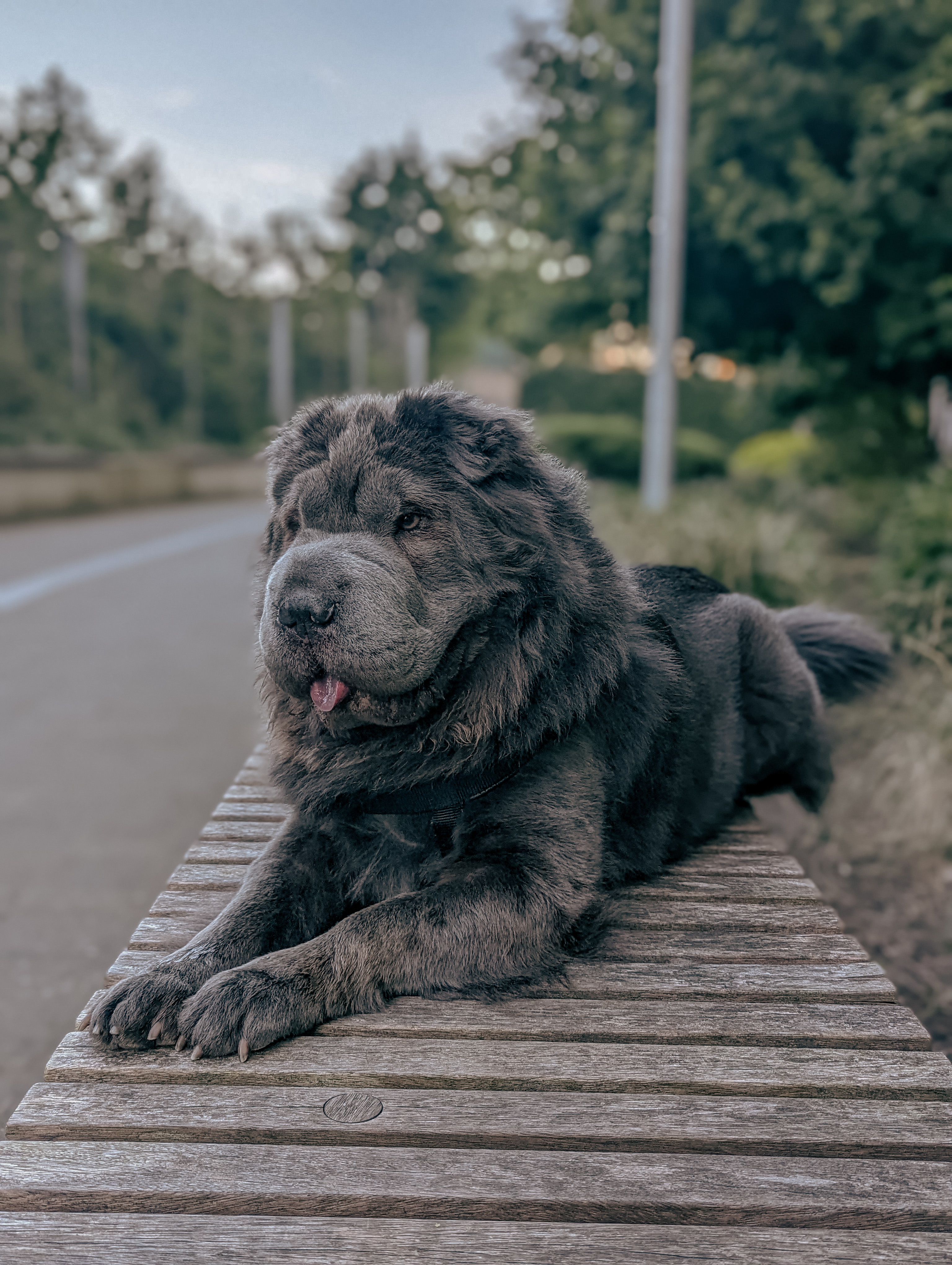
You can tell a lot about a Shar Pei by the way it approaches a walk. Considered, deliberate, quietly taking stock. This is not a breed that tears off down the first path it finds. They are rewarding walking companions when you understand what they need, and this guide covers the things that genuinely matter: how far, how hot is too hot, what the wrinkles need afterwards, and the one health condition worth knowing by name.
How much exercise does a Shar Pei need?
Most adult Shar Peis do well with around an hour of exercise each day, split across two walks. The emphasis is on quality rather than distance: a forty-minute walk with interesting terrain, good smells, and the chance to stop and investigate will do more for a Shar Pei than a brisk five-kilometre march. They are not a high-octane working breed, and they will generally let you know when they have had enough.
Puppies need a different approach. Shar Pei bones and joints are still developing until around twelve to eighteen months, and long walks on hard surfaces during this period can contribute to joint problems later. Short, gentle outings of fifteen to twenty minutes are better for a Shar Pei pup than anything more ambitious.
Senior Shar Peis often do best with shorter, more frequent outings rather than one long walk. Watch for stiffness after exercise and adjust the distance accordingly.
Why heat is a serious concern for Shar Peis
Shar Peis are brachycephalic, meaning they have a shorter, flatter muzzle than most breeds. The practical consequence is that they regulate body temperature less efficiently than dogs with a longer airway. Where a Labrador can pant away a warm afternoon fairly comfortably, a Shar Pei working in the same conditions is dealing with more restricted airflow and skin folds that trap heat. They overheat faster than their composed exterior often suggests, and they can show fewer obvious warning signs before the situation becomes serious.
In summer, early morning or evening walks are genuinely important for this breed rather than just a sensible preference. The ground temperature at these times is also significantly lower, which matters for their paws. For a full breakdown of safe walking temperatures for different breeds, see our temperature guide.
Signs of overheating to watch for on a walk: heavy panting that is not easing off, excessive drooling, a marked slowing of pace, and reluctance to keep going. If any of these appear, move to shade, offer water, and rest. If the dog does not recover within a few minutes, head home.
Choosing the right terrain
Shar Peis move most comfortably on firm, even ground. Parkland, well-maintained woodland paths, and riverside walks with a solid underfoot surface all suit them well. Rocky or steep terrain is harder on their joints, particularly as they get older, and is worth avoiding as a regular route choice.
Muddy walks are not off-limits, but they carry an extra task when you get home. Any walk involving wet or muddy ground means the skin folds need attention before you do anything else.
Skin fold care after walks
The wrinkles that define the Shar Pei need attention after any walk on damp or muddy ground. Moisture and debris collect in the folds around the face, neck, and body quickly, and if left there they create conditions for skin infection in a short amount of time. This is not a breed you can towel off and leave.
After a wet or muddy walk, use a soft dry cloth or a gentle pet-safe wipe to clean carefully between each fold. Then dry thoroughly. The drying matters as much as the cleaning: trapped moisture is the main problem. Add it to the post-walk routine and it takes less than five minutes.
In summer, check the folds regardless of whether the walk was wet. Sweat and heat can build up just as quickly. For a more detailed guide, see Shar Pei skin fold care after walks.
Walking with other dogs
Shar Peis have a deserved reputation for being reserved around unfamiliar dogs. This is normal for the breed rather than a sign of anything wrong. Originally bred in China as both a guard dog and for fighting, the Shar Pei’s caution around strangers (canine and human) is deeply ingrained.
On-lead walking in areas with other dogs, calm handling of encounters, and distance introductions rather than forced contact is the right approach. Do not push a Shar Pei into greetings it is not comfortable with. Many Shar Peis settle comfortably around familiar dogs they have grown up with while remaining watchful around strangers their whole lives. That is a manageable trait, not a problem to be fixed.
What to watch for on walks: SPAID and Shar Pei Fever
Shar Peis carry a health consideration specific to their breed that is worth knowing by name before you encounter it on a walk. Familial Shar Pei Fever (FSF) is a periodic fever syndrome that causes sudden high temperature and swelling in the hocks (the joint just above the paw), often appearing without obvious prior warning. FSF is now understood as part of a broader cluster of autoinflammatory conditions specific to Shar Peis, grouped under the name Shar Pei Autoinflammatory Disease (SPAID). Dr Linda Tintle’s research and collaborations with scientists at Cornell University and other institutions have been instrumental in advancing the medical understanding of SPAID and the range of ways it presents in affected dogs.
On a walk, this can show up as sudden reluctance to continue, limping that appears without obvious cause, or a dog that simply stops and does not want to move. You may also notice swelling around one or both hock joints when you examine the dog.
If your Shar Pei develops any of these signs during or after a walk, particularly alongside a fever or the characteristic hock swelling, cut the walk short and call your vet. FSF episodes generally respond well to appropriate treatment, but they do need proper management. Knowing what to look for puts you well ahead of the problem. For a fuller guide, see Shar Pei Fever and SPAID.
The best walks for Shar Peis
A good Shar Pei walk tends to have a few consistent features: shade available somewhere on the route, access to water, firm ground underfoot, and a distance that leaves the dog comfortable rather than wrung out. In summer, this means planning ahead rather than heading out and hoping for the best.
Parkland walks with tree cover, riverside routes on established paths, and woodland walks on well-drained ground are reliable choices. Exposed coastal paths or open moorland in warm weather are better saved for cooler months, when Shar Peis can genuinely enjoy the space.
Sniffout shows live weather conditions before you head out, which matters more for this breed than most. The difference between a comfortable Shar Pei walk and a difficult one can be as small as five degrees and a bit of cloud cover. The walks database covers routes across the UK with terrain and difficulty detail, so you can find the kind of ground your Shar Pei will thank you for.
A good Shar Pei walk is a considered one
Shar Peis are not high-maintenance in the way some breeds are, but they are specific: they like familiar terrain, sensible temperatures, and the company of someone who pays attention to them. Luna, the Shar Pei who inspired Sniffout, is proof of what that relationship looks like when it works. Get the walk right and they are companionable, calm, and quietly delightful to be out with.
Frequently asked questions
How much exercise does a Shar Pei need?
Most adult Shar Peis do well with around an hour of exercise a day, typically split across two walks. Quality matters more than distance: a shorter walk with varied terrain and time to stop and explore is more beneficial than a long march at pace. Puppies under twelve months should have shorter outings of fifteen to twenty minutes to protect developing joints.
Can Shar Peis overheat on walks?
Yes. Shar Peis are brachycephalic and regulate heat less efficiently than longer-muzzled breeds. Their skin folds also trap heat. They can overheat faster than their calm exterior suggests, and may show fewer warning signs than other breeds before the situation becomes serious. In warm weather, walk in the early morning or evening and always carry water.
How do I care for Shar Pei skin folds after a walk?
After any wet or muddy walk, clean carefully between each fold with a soft dry cloth or gentle pet-safe wipe, then dry thoroughly. Trapped moisture is the main cause of skin fold infections. In summer, check the folds after every walk even if it was dry: sweat and heat can accumulate in the folds just as quickly.
What is Shar Pei Fever and what should I watch for on walks?
Familial Shar Pei Fever (FSF) is a periodic fever syndrome that causes sudden high temperature and swelling in the hock joints. On a walk it can show up as sudden reluctance to continue, limping without obvious cause, or a dog that simply stops and will not move. Check the hock joints for swelling. If you suspect an FSF episode, cut the walk short and call your vet. FSF is part of a broader condition called Shar Pei Autoinflammatory Disease (SPAID) and responds well to appropriate treatment when managed promptly.
Are Shar Peis good with other dogs on walks?
Shar Peis are typically reserved around unfamiliar dogs, which is a normal breed trait rather than a behavioural problem. Many live comfortably alongside dogs they know while remaining cautious with strangers for their whole lives. On walks, keep introductions on-lead, give them distance from other dogs if they are uncomfortable, and do not push greetings they are not ready for.