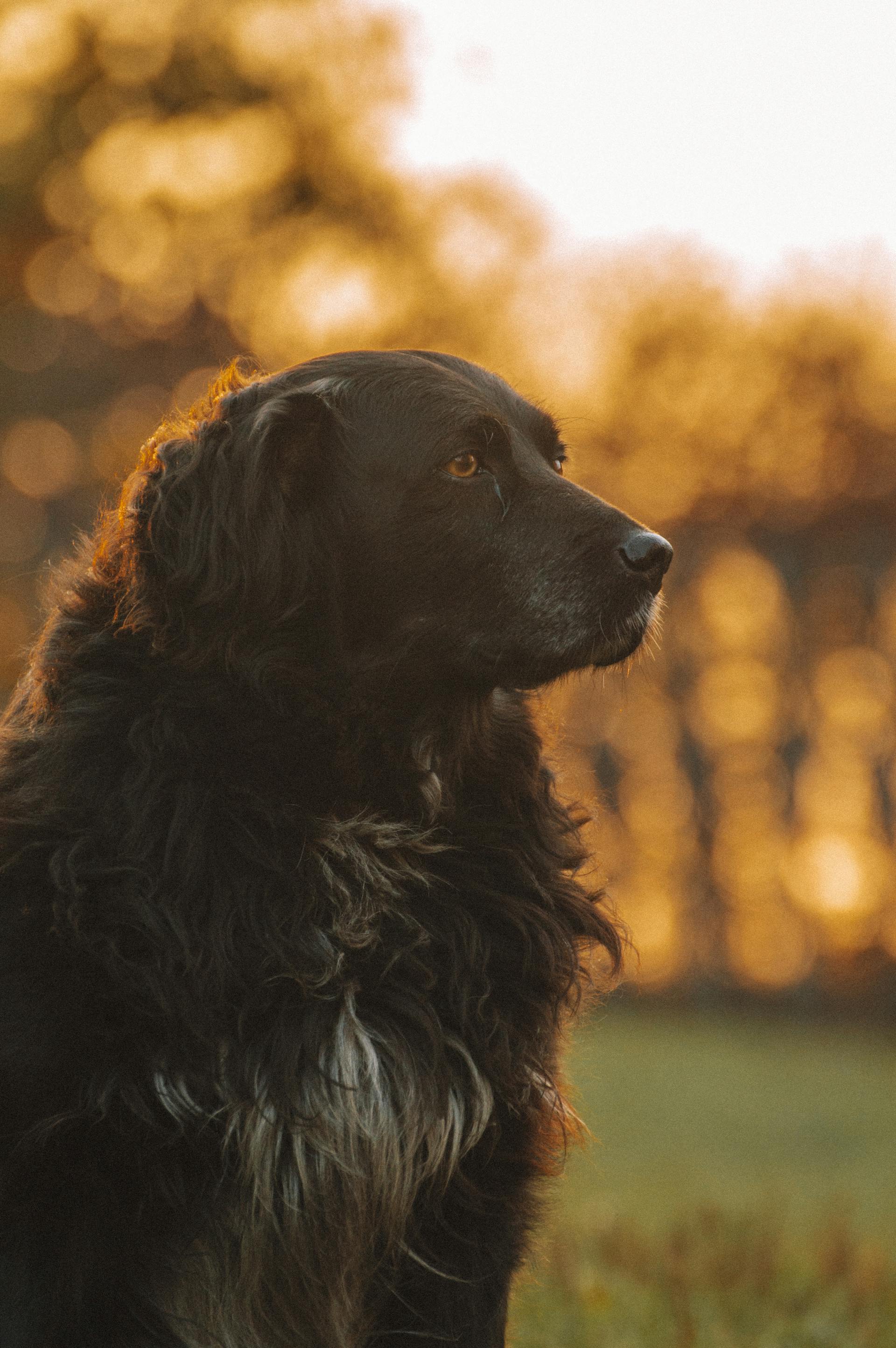
Biscuit is five and still capable of embarrassing Mango - who is two - on a long moorland circuit. But Biscuit will not be five forever, and the way I walk him will need to change before he shows obvious signs that it should. That is the thing about senior dogs: the adjustments work best when they are made early and gradually, not in response to a vet visit or a limp. This guide covers what to expect, what to watch for, and how to adapt without reducing the quality of what you both get from a walk.
When is a dog considered senior?
There is no single age at which a dog becomes a senior. The threshold depends significantly on size, and the difference between breeds is substantial enough that a single number is misleading.
| Size | Typical senior age |
|---|---|
| Small breeds (under approximately 10kg) | Around 10 to 12 years |
| Medium breeds (approximately 10 to 25kg) | Around 8 to 10 years |
| Large breeds (approximately 25 to 40kg) | Around 7 to 8 years |
| Giant breeds (over approximately 40kg) | Around 5 to 7 years |
Seven is a reasonable general reference point - and the RSPCA uses it as a marker at which dietary changes may be worth considering - but it understates how much a Great Dane and a Jack Russell differ at the same age. Giant breeds can be showing genuine senior characteristics at five. A healthy Jack Russell at seven may have another decade ahead of it.
The practical implication is that the size of your dog matters more than the calendar. If you have a large or giant breed, it is worth thinking about exercise adaptations earlier than you might expect.
How exercise needs change with age
The consistent message from PDSA, the RSPCA, and the Kennel Club is straightforward: do not stop, adapt.
PDSA put it simply: “little and often is best as joints get stiffer when they’ve not been used for a bit.” The Kennel Club’s guidance echoes this from a different angle: “Maintain a constant level of daily exercise rather than random strenuous activity, as random strenuous activity often guarantees soreness the following day.”
Both point to the same practical approach. What changes is duration and intensity, not frequency. A senior dog that previously did one long walk and one shorter one each day is better served by three or four shorter outings than by cutting the total in half. Regular gentle movement keeps joints mobile. Inactivity stiffens them.
What to change:
- Duration of individual walks, not how often you go out.
- High-impact activity: ball chasing, jumping, and running on uneven ground become harder on joints and should be reduced or stopped.
- Route ambition: familiar, flatter paths suit a senior dog better than new terrain with steep gradients or challenging ground.
What not to change:
- Daily outdoor access. Senior dogs still need to get out every day - for physical health, mental stimulation, and the simple pleasure of sniffing their way through familiar routes.
- Consistency. Irregular bursts of exercise after days of inactivity cause more soreness than regular gentle walks do. Steady rhythm matters.
- Sniffing time. A slower walk with more time to investigate is not a lesser walk. For an older dog it can be the best kind.
Signs a walk is too long or strenuous
Some signs are obvious. A dog that lies down mid-walk and refuses to continue is giving you a clear signal. Limping, lagging well behind, excessive panting unrelated to temperature, or visible leg trembling during a walk all indicate the outing has gone on too long or the terrain has been too demanding.
Others are subtler and show up later. A dog that completes a walk normally but is slow to rise and stiff the following morning has given you important information about yesterday. This is worth naming clearly as a practical diagnostic tool.
The morning-after test: if [dog name] is noticeably stiffer when getting up the morning after a walk than on a normal morning, that walk was probably too much. The Kennel Club’s guidance on this is direct - random strenuous activity often guarantees soreness the following day. A walk that causes no obvious trouble during or immediately afterwards can still register as discomfort the next morning, particularly because dogs tend not to show pain clearly while they are moving. The day after is often more informative than the day of.
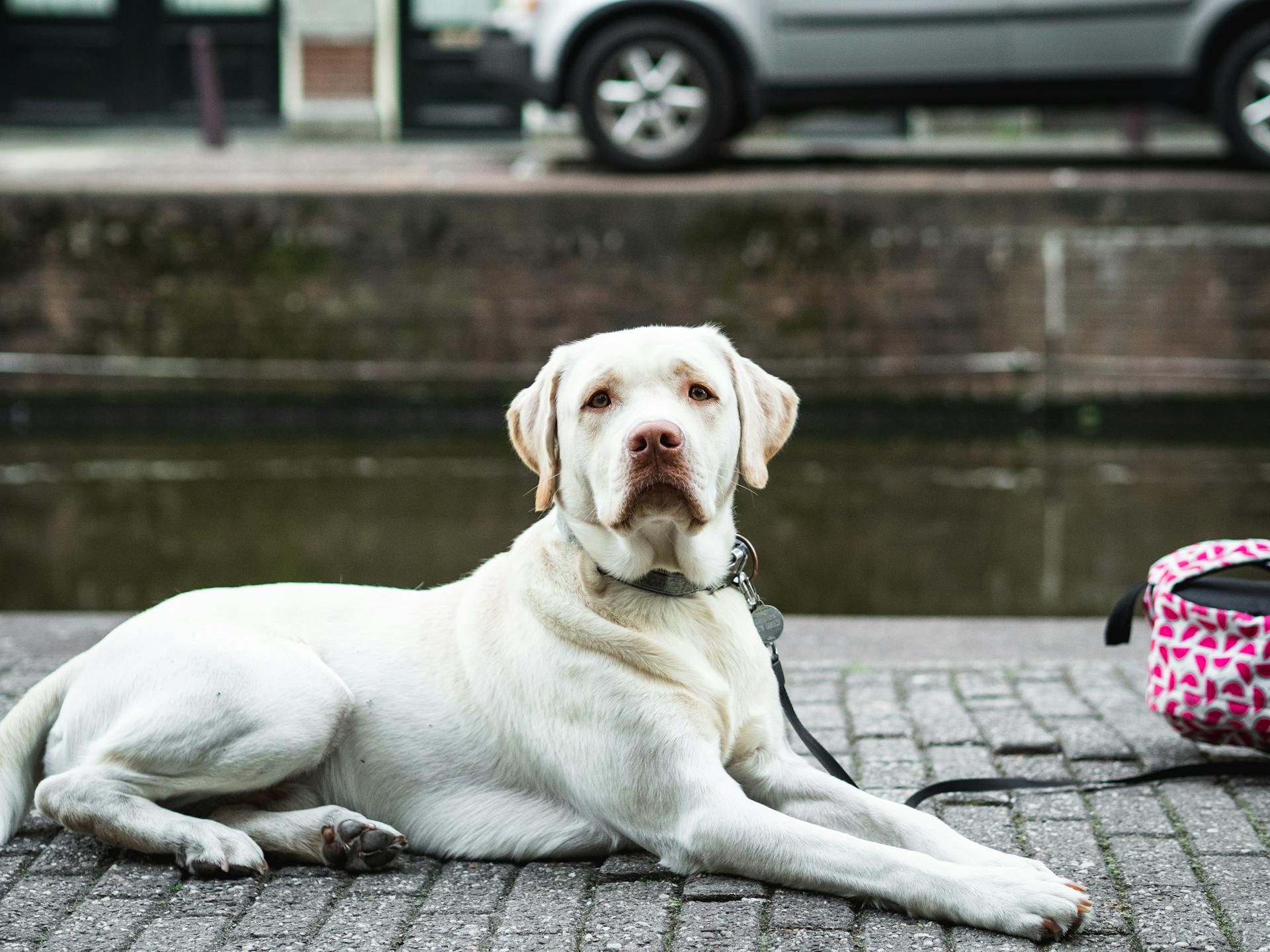
Other post-walk signs worth watching for: reluctance to get up from bed, lameness that was not present before, and more sleep than usual in the hours following a walk.
Joint conditions to be aware of
Arthritis is the most common joint condition in older dogs, and one of the most frequently missed in its early stages. Owners often attribute the signs to normal ageing - slowing down, being less keen on long walks, taking longer to settle after exercise. Sometimes that is what it is. Sometimes it is pain.
Signs of arthritis worth recognising include stiffness after rest or after walks, limping that may be subtle at first, difficulty rising from lying down, reluctance to climb stairs or jump into the car, muscle wastage visible in the rear limbs, and behavioural changes including increased grumpiness, reduced interest in play, and more sleep. PDSA identifies all of these. The key point is that early signs are worth a vet assessment rather than acceptance as a normal part of getting older. Treatment options exist, and earlier identification tends to mean better outcomes.
For arthritic dogs, the exercise approach is: regular short walks each day, consistent rather than variable, avoiding jumping, ball chasing, skidding, and running on uneven ground. Controlled gentle movement is better than inactivity. Slippery surfaces indoors are worth addressing with rugs or anti-slip mats.
Hip dysplasia is a developmental condition - present from puppyhood in affected dogs - in which the hip joints do not fit together correctly. It causes pain and instability that worsens as dogs age. Signs include a “bunny hopping” gait, hind leg lameness, reluctance to climb stairs, and reduced interest in walks. The exercise approach mirrors that for arthritis: short lead walks, no jumping or chasing, and hydrotherapy as a low-impact alternative if the dog will tolerate water exercise.
If you suspect either condition, a vet conversation is the right first step. A range of treatments are available, from pain management to physiotherapy, and they can make a significant difference to what a dog can comfortably manage.
The cognitive benefit of keeping active
There is a reasonable body of evidence suggesting that keeping older dogs physically active supports their cognitive health as well as their physical health. A 2023 peer-reviewed study from the Dog Aging Project, analysing data from over 11,000 companion dogs, found that inactive dogs had 6.47 times higher odds of reaching a clinical threshold for canine cognitive dysfunction compared to dogs of the same age that were very active.
That is a striking number, and it is worth including an important qualification alongside it. This was an observational study, not a controlled experiment. The study authors explicitly acknowledge the possibility of reverse causation: dogs already experiencing cognitive decline may naturally become less active, rather than inactivity causing the decline. The research cannot prove that increasing exercise prevents cognitive problems.
What it does suggest - and this is where it is practically useful - is that maintaining physical activity as dogs age appears to be associated with better cognitive outcomes. Keeping senior dogs moving, mentally engaged on walks, and sniffing their way through familiar and varied environments is worthwhile for reasons that extend beyond the physical.
Weather considerations
Cold weather: Older dogs feel the cold more acutely than younger dogs, and cold damp conditions worsen joint stiffness and arthritis. Vets Now identifies 7 degrees Celsius as the threshold at which elderly dogs may benefit from a coat. At temperatures between 1 and -4 degrees, they describe conditions as potentially unsafe for elderly dogs and recommend shortening walks and monitoring for signs of cold stress - shivering, whining, pulling paws back, tucking the tail, or reluctance to go outside. Icy paths are a particular hazard: a dog with weakened muscle strength and joint stiffness is at significantly higher fall risk on slippery ground than a younger dog.
A dog coat is a practical piece of kit for a senior dog in a UK winter. It is not indulgence.
Hot weather: Older dogs regulate heat less efficiently than younger dogs, and the risk of overheating on a warm summer walk is higher. Early morning or evening are the right times for summer walks with a senior dog. For detail on signs, thresholds, and what to do if a dog overheats, see our guide to walking dogs in hot weather.
Practical adaptations
Shorter, more frequent outings. This is the single most useful structural change. Two or three shorter outings distribute the exercise load more evenly across the day, keep joints moving without overloading them, and give more opportunity for rest between walks.
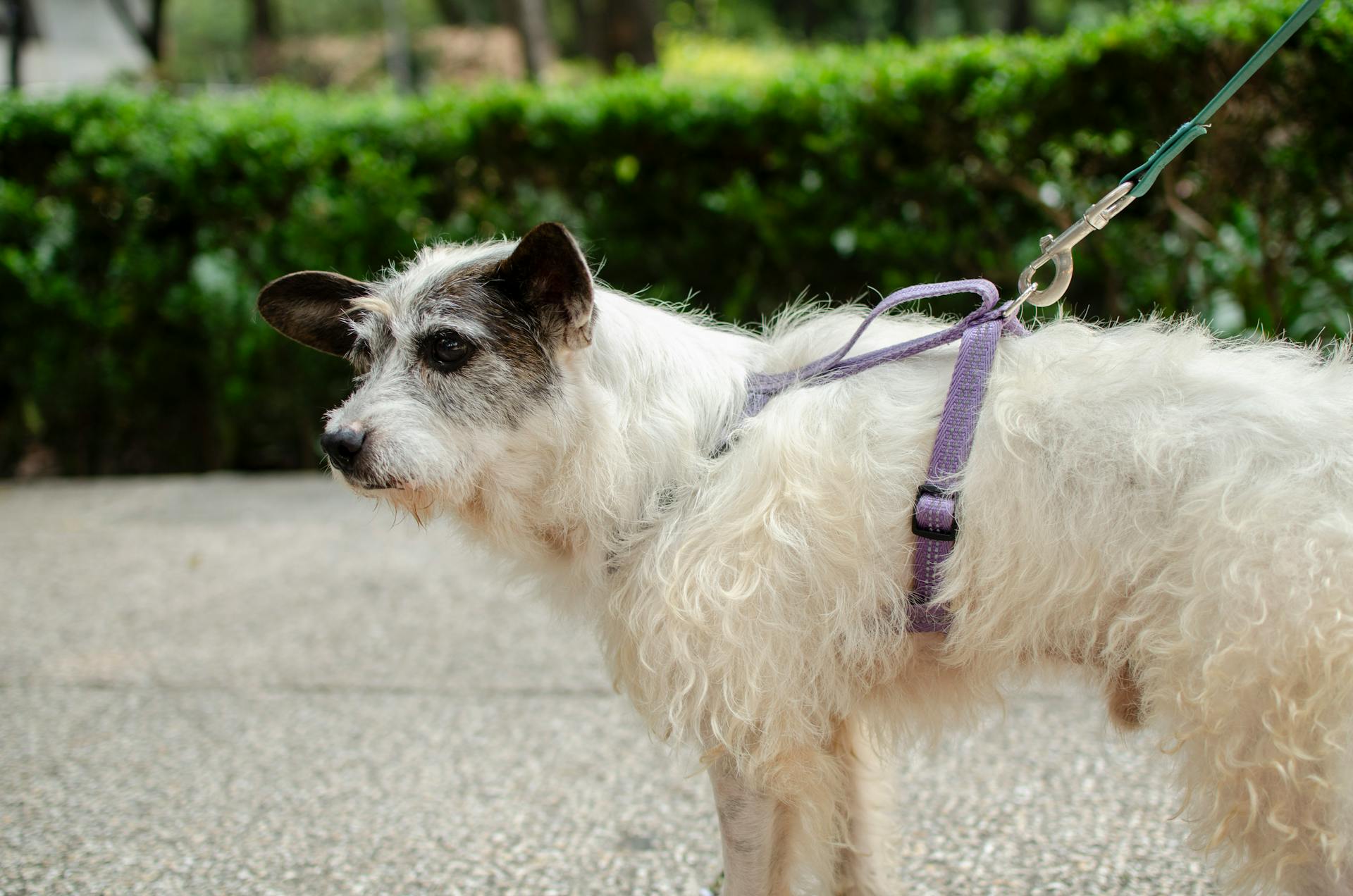
Harness over collar. A collar concentrates lead tension on the neck. For a dog with any neck, spine, or joint involvement, a harness distributes pressure across the chest instead, which is considerably gentler on the joints that tend to cause problems. A harness with a handle on the back is particularly useful for dogs with more significant mobility issues, allowing you to assist over obstacles or steps without lifting by the collar.
Respect rest stops. If [dog name] lies down mid-walk or slows to a stop and shows no interest in continuing, that is the walk done. Do not encourage or push past that point. PDSA’s guidance is direct: if a dog lies down on a walk, they need to rest.
Car access. Getting in and out of cars becomes difficult earlier than many owners expect, particularly for larger breeds. A ramp, or simply lifting the dog in and out, removes a repeated high-impact movement that can be hard on hips and shoulders. Getting to the walk matters as much as the walk itself.
Walk timing. The first walk of the day is often the hardest for a dog with stiff joints. A short initial outing - long enough to move the joints and get blood circulating - followed by a more substantial walk once the dog has loosened up can work better than launching straight into the main walk of the day. The principle is the same one that applies to arthritic joints generally: gentle movement first, more sustained movement after.
Sniffing time. A shorter walk that allows [dog name] to stop and investigate properly is a richer walk than a brisk one at the same distance. Sniffing is cognitively demanding in the best way - it engages the dog’s attention fully and delivers genuine mental stimulation. Letting a senior dog lead the pace and spend time on interesting smells is not a compromise. It is a better walk for them.
When to call the vet
Get in touch with your vet if you notice any of the following: new or worsening lameness; morning stiffness that is getting progressively worse; reluctance to go on walks [dog name] previously enjoyed; exercise intolerance (tiring noticeably earlier than before); pain response when touched or handled around the joints; rapid behavioural changes including grumpiness, withdrawal, or disrupted sleep.
None of these require waiting to see if things improve. The window for effective intervention on joint conditions is better earlier, and a vet assessment of an older dog’s exercise tolerance is a straightforward conversation.
The RSPCA recommends twice-yearly vet checks for senior dogs rather than the annual schedule that suits younger dogs. Some practices offer senior-specific clinics. A proactive visit when a dog reaches senior age - before anything is obviously wrong - is a reasonable way to get a baseline assessment and confirm that the walks you are doing are appropriate for where your dog is right now. The goal is not to deliver bad news. It is to have the information to make good decisions.
Senior dogs can and should keep walking. The routine changes. The quality does not have to.